Tree Laser Engraving Cut Files
A Designer’s First Look: Clean, Calm, and Craft-Ready
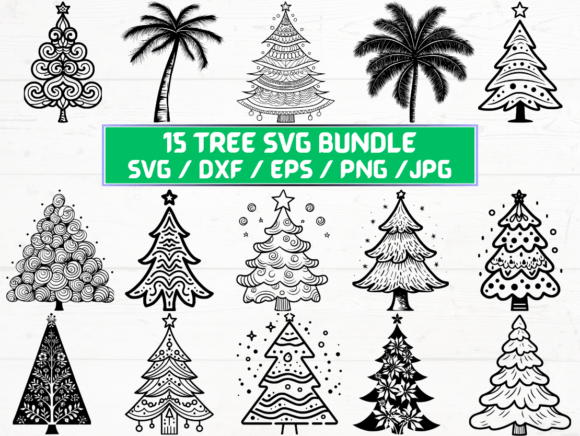
Opening the ZIP folder for Tree Laser Engraving Cut Files, I immediately notice the quiet confidence in its simplicity. These aren’t ornate botanical illustrations or hyper-detailed silhouettes — they’re balanced, intentional tree forms: some single-trunked and upright, others branching wide with subtle asymmetry. The lines feel purpose-built for cutting *and* translating cleanly into stitch — not overly fussy, not too sparse. As an embroidery designer who’s stitched hundreds of nature motifs, I appreciate how this collection avoids visual noise while still carrying warmth and character. It reads as serene but not sterile — perfect for a handmade tote bag destined for a local farmers’ market, or a baby onesie where softness and clarity matter more than flash.
Where This Design Truly Shines in Real Projects
I recently used one of the Tree Laser Engraving Cut Files as the centerpiece for a custom embroidered linen tea towel — a small-batch product for my Etsy shop. The result? Crisp, confident stitching with no skipped details, even in the finer branch tips. That tells me these files hold up well as embroidery assets when converted thoughtfully. They work especially well for:
- Custom apparel: Think sweatshirt embroidery on midweight cotton fleece — the clean lines prevent thread buildup and read clearly at 3–4 inches tall.
- Embroidered patch production: The defined outer edges and moderate negative space make them ideal for iron-on or sew-on patches without excessive trimming.
- Baby embroidery and nursery decor: Gentle shape + minimal detail = low risk of snagging, high comfort factor, and instant recognition for new parents.
- Holiday and wedding gifts: A single tree motif stitched on a neutral pillow cover or kitchen towel feels timeless, not seasonal — it sells year after year.
- Boutique branding and small shop merchandise: These trees carry quiet sophistication — great for craft business packaging tags, aprons, or staff uniforms that reflect intentionality, not clutter.
Where to Pause — Not Every Fabric or Fit Is Equal
That said, Tree Laser Engraving Cut Files aren’t universally plug-and-play. I tested one on a lightweight rayon blend blouse — beautiful fabric, but the design’s fine branches lost definition due to slight shifting under tension. Here’s where attention matters:
- Small hoop sizes: Some versions are wider than they are tall — check your hoop dimensions before digitizing. A 4×4 hoop may require cropping or repositioning.
- Textured or stretchy fabric: Knits and wovens with pronounced texture (like bouclé or heavy seersucker) can blur delicate line work. Use cutaway stabilizer and reduce stitch density slightly.
- Dark fabric: The PNGs include transparent backgrounds, which helps with mockups — but always test thread color contrast. A light olive thread on charcoal twill reads softer than expected; sometimes you need a touch more saturation.
- Curved surfaces (caps, hats): The flatter, more vertical tree silhouettes adapt better than wide-spreading ones. Avoid placing intricate lower branches directly over seams or crowns.
- Frequent-wash items: For baby clothes or kitchen towels, confirm your digitized version uses secure satin or fill stitches — not just running stitch outlines — especially around branch ends.
What This Design Adds to Your Finished Product — Beyond Stitching
It’s easy to focus only on technical execution, but as someone who sells handmade products and consults with Etsy sellers, I know Tree Laser Engraving Cut Files quietly lift perceived value. Customers don’t see “vector file” — they see calm, considered craftsmanship. A tote bag with this motif feels curated, not mass-produced. A personalized gift stitched from it reads as intentional — like the giver paused to choose something meaningful, not trendy. That builds trust. It also supports brand consistency: if your craft business centers on earthy, minimalist aesthetics, this is a reliable, repeatable design asset — not a one-off novelty. And because the shapes are legible at multiple scales, it works equally well in a printable mockup preview *and* as the final stitched piece on a pillow cover.
Practical Notes Before You Stitch
Before committing to a client project or listing on your shop:
- Test on scrap fabric first — especially if using textured, dark, or stretchy material.
- Review stitch density in your embroidery software — avoid overcrowding fine branches.
- Confirm hoop size compatibility — these files are versatile, but layout matters.
- Inspect small details at 200% zoom — ensure no stray nodes or overlapping paths that could cause stitching hiccups.
- Try black-and-white mockups — does the shape hold up without color distraction?
- Use proper stabilizer — medium-weight cutaway for most woven projects; tear-away for stable knits.
- Check licensing terms — since this is a digital embroidery file sold as Graphics within Crafts, confirm whether commercial use (e.g., selling finished embroidered items) is permitted per the seller’s policy.
Final Thought: A Quiet Workhorse, Not a Flashy Gimmick
Tree Laser Engraving Cut Files won’t shout — and that’s their strength. In a landscape full of overdesigned, trend-chasing motifs, this collection offers grounded, adaptable elegance. It’s the kind of embroidery file you return to again and again: for a last-minute personalized gift, a boutique shelf staple, or a small batch of custom apparel that feels both special and sincere. It doesn’t try to do everything — it does one thing beautifully, and leaves room for your craftsmanship to shine through.