Cat Laser Engraving Cut Files: Graphics for Crafts & Local Branding
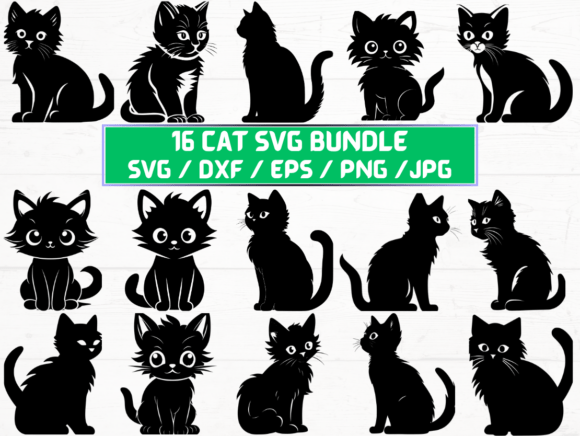
As a brand designer who’s developed visual identities for over 40 local businesses—from artisanal candle studios in Portland to family-run bakeries in Austin—I opened Cat Laser Engraving Cut Files expecting playful charm. What I found was more nuanced: a tightly curated set of feline-themed vector illustrations that balance precision with warmth—ideal for small business branding where authenticity and craftsmanship matter.
This isn’t cartoonish clipart. Each design carries subtle engraving texture, clean line weight, and intentional negative space—evoking hand-carved wood or etched metal. The mood is friendly yet refined, handmade but not rustic, whimsical without sacrificing polish. It leans into soft modern design rather than kitsch, making it unexpectedly versatile for skincare brands, boutique coffee labels, children’s toy packaging, or seasonal gift shop visuals.
Where Cat Laser Engraving Cut Files Elevates Real Local Business Projects
I recently used three files from this collection for Whisker & Wheat, a new oat-milk bakery in Nashville specializing in cat-themed pastries (yes, truly). We needed cohesive, ownable graphics—not generic stock—that could scale across packaging, social media, and in-store signage without feeling repetitive or juvenile.
The Cat Laser Engraving Cut Files delivered across five key areas:
- Product labels & packaging accents: Applied as foil-stamped motifs on kraft paper bags and jar lids—SVG scalability ensured crisp edges at any size, while the transparent PNGs layered cleanly over cream-colored backgrounds.
- Brand identity extensions: One simplified silhouette became a secondary mark beside their wordmark logo—adding warmth without competing visually. It now appears on thank-you cards, receipt stamps, and reusable tote tags.
- Social media graphics: Used as animated SVG elements in Instagram Reels headers and static story frames. The clean outlines held up beautifully against photo backgrounds and video overlays.
- Printed promotional materials: Printed at 12” width on matte-finish flyers—no pixelation, no color bleed. The EPS files rendered flawlessly in Adobe Illustrator during prepress checks.
- Seasonal campaign visuals: Adapted a curled-cat motif for holiday cookie boxes by recoloring it in deep forest green and gold—proving these aren’t one-note illustrations but flexible design assets.
Why This Set Strengthens Small Business Branding—Beyond Aesthetics
For local businesses competing on shelf presence and digital attention, consistency builds trust—and Cat Laser Engraving Cut Files supports that through technical reliability and stylistic cohesion. When applied thoughtfully, it improves:
- First impression: Customers notice clean, intentional detail before they read a single word.
- Product recognition: A recurring feline motif becomes a silent signature—like a visual shorthand customers begin to associate with quality and care.
- Visual hierarchy: These illustrations work best as supporting elements—not dominant logos—so they frame text, guide the eye, and add rhythm without overwhelming.
- Professional packaging: Even on budget-friendly materials, precise vectors signal investment in craft, elevating perceived value.
- Emotional connection: Playful yet polished feline graphics resonate with audiences who value personality and humanity in local brands.
Best Use Cases—And Where to Proceed Thoughtfully
These files shine brightest in contexts where charm, clarity, and craft intersect:
- Product labels and hang tags for handmade soap, candles, or gourmet food items
- Decorative borders and corner accents on printed inserts or recipe cards
- Hero graphics for website banners or email headers
- Stickers and die-cut packaging embellishments
- Social media campaign visuals—especially for pet-friendly, wellness, or lifestyle brands
- Seasonal packaging updates (think Halloween, Valentine’s Day, or spring launches)
Use with caution in:
- Formal corporate branding systems—this set reads warm and human-scale, not boardroom-ready.
- Labels under 0.5” height—the fine engraving lines may blur or vanish in small print.
- Packaging with dense ingredient lists or regulatory text—don’t let decorative elements compete with essential information.
- Luxury minimalist brands relying on negative space and restraint—these illustrations add character, not silence.
- Low-contrast backgrounds (e.g., light gray on off-white)—always test PNG transparency in real layout conditions.
Practical Designer Notes You’ll Actually Use
Before committing to Cat Laser Engraving Cut Files for client work or your own product line, run these checks:
- Test each file on actual packaging mockups—not just screen previews—to assess scale, spacing, and contrast.
- Convert to grayscale and check legibility: does the engraving texture hold up when printed in black-only?
- Preview on small labels (1.5” x 1.5”) using your printer’s native resolution—some DXF imports can shift slightly in cutting software.
- Overlay with your brand colors: do the lines retain definition against your primary palette? Try both serif and sans serif pairings.
- Compare side-by-side with competitor packaging—does it stand out for craftsmanship, not just cuteness?
- Verify commercial licensing explicitly—this is essential for physical product sales, branded merchandise, or client deliverables.
- Inspect SVG editability: are paths grouped logically? Can you isolate ears, paws, or tails for custom adaptations?
- Test alongside script fonts and handwritten display fonts—these illustrations complement organic type beautifully, but clash with ultra-geometric sans serifs.
Ultimately, Cat Laser Engraving Cut Files isn’t just another digital product—it’s a thoughtful graphic design asset built for real-world small business branding. Whether you’re designing for a candle brand launching its first retail line or updating a florist’s seasonal promo suite, these files offer craft-level precision wrapped in approachable charm. In an era where local businesses win through authenticity and attention to detail, having reliable, licensable, and stylistically coherent design assets like this isn’t optional—it’s foundational.