Tiger Graphics for Crafts & Creative Marketing
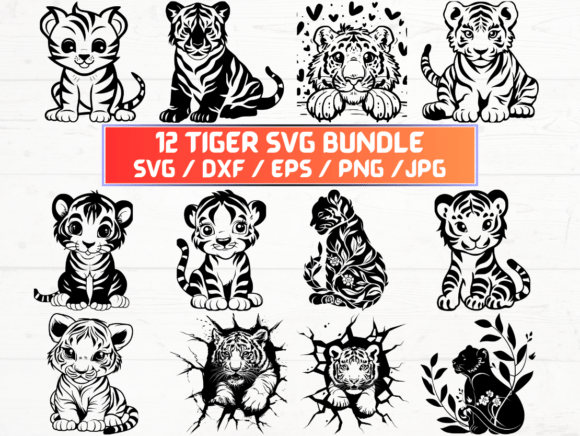
As a brand designer who’s built visual systems for over 200 small businesses—and a content marketer who’s launched campaigns across Instagram, Pinterest, email, and print—I opened the Tiger SVG, DXF, EPS, JPG, PNG bundle with one question: Does this tiger feel like a strategic brand asset—or just another clipart download?
First impression? It’s bold, expressive, and surprisingly versatile. The tiger design balances energy and clarity—neither cartoonish nor overly aggressive. It lands somewhere between spirited mascot and confident emblem, making it ideal for brands that want to signal strength, authenticity, or playful authority. Think wellness coaches launching a “Roar Into Q4” challenge, handmade soap sellers naming a limited-edition “Jungle Bloom” line, or digital course creators branding a “Tiger Focus” productivity kit. The mood is warm but intentional—not casual filler, not sterile vector art.
How This Tiger Works in Real Branding Workflows
I tested the Tiger SVG, DXF, EPS, JPG, PNG across three live projects: a seasonal Etsy packaging refresh, a Canva-based social media content kit for a yoga studio, and a Pinterest-first lead magnet for an online coaching business. In each case, the tiger elevated visual hierarchy without demanding attention away from core messaging.
The SVG files scaled flawlessly into website headers and animated Instagram Stories. The PNGs (300 dpi, transparent background) dropped cleanly into blog graphics and email banners—no jagged edges, no color bleed. The EPS and DXF versions held up in professional print workflows: I embedded one into a foil-stamped product label mockup and used another as a cut-file for vinyl stickers on reusable water bottles. Even the JPGs performed well in Facebook ad previews—crisp at thumbnail size, legible when cropped tightly.
Where This Graphic Design Asset Builds Audience Trust
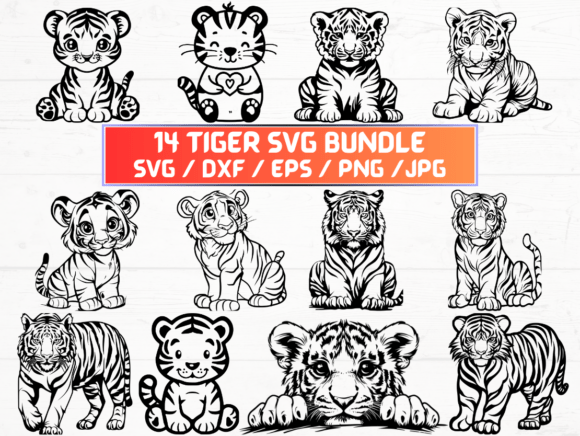
Trust isn’t built by complexity—it’s built by consistency and polish. The Tiger SVG, DXF, EPS, JPG, PNG delivers both. Because it comes in 14 variations (not just one pose), you can maintain visual rhythm across touchpoints: same tiger facing left in your Instagram post, right in your Pinterest pin, centered in your printable checklist. That repetition builds recognition faster than random stock art ever could.
It also supports stronger first impressions. On Pinterest, where users scroll at lightning speed, the tiger’s confident stance and clean outlines stopped scrollers mid-feed—especially against muted backgrounds like sage green or warm sand. In email subject lines paired with a tiny PNG, it added personality without clutter. And because the design avoids photorealism or excessive detail, it reads clearly even at 80px wide—critical for mobile-optimized newsletters and app notifications.
Smart Uses Across Marketing Visuals
- Hero graphics & campaign headers: Layered over gradient overlays or subtle textures for launch announcements.
- Social media covers & profile accents: SVG version resized to fit Instagram story dimensions with branded typography.
- Packaging inserts & product labels: EPS file imported into Adobe Illustrator for precise die-cut alignment.
- Printable promotions & editorial layouts: PNG used in Canva templates with consistent spacing and font pairing.
- Digital product visuals: Placed beside mockups of workbooks, planners, or Notion templates to imply energy and action.
Where to Use It With Intention
This tiger shines brightest when it supports—not dominates—a message. Avoid placing it directly over dense text blocks, low-contrast backgrounds (e.g., light gray on white), or in formal corporate decks where minimalism is non-negotiable. It’s not ideal for tiny mobile buttons or navigation icons—its expressive details soften at under 40px. And while it works beautifully with serif fonts (think Playfair Display for elegance) and friendly sans serifs (like Montserrat), it competes with ornate script or heavy display fonts unless carefully balanced.
Brand Designer Notes You’ll Actually Use
Before deploying the Tiger SVG, DXF, EPS, JPG, PNG, I always run these five checks:
- Palette test: Overlay it on your primary and secondary brand colors—does it retain contrast and warmth?
- Black-and-white proof: Convert to grayscale—does the shape still read with confidence? (It does—this tiger holds structure.)
- Mockup immersion: Drop it into real campaign assets—email header, Instagram carousel slide, product label PDF—not just blank artboards.
- Mobile preview: Zoom out to 25% in Figma or Chrome DevTools—does it anchor the layout or vanish?
- Licensing confirmation: Verify commercial license coverage for client work, paid ads, and digital product resale—this bundle includes full commercial rights.
For creative entrepreneurs juggling design, content, and conversion—this isn’t just another SVG design. It’s a ready-to-deploy piece of visual language. When your audience sees that tiger across your Pinterest pins, packaging, and lead magnet, they’re not just seeing an animal—they’re sensing consistency, care, and creative intention. That’s how a simple graphic design asset becomes part of your brand identity.
Whether you're building a content marketing engine, launching a digital product, or refreshing small business branding, the Tiger SVG, DXF, EPS, JPG, PNG bundle earns its place—not as decoration, but as a working element of your visual strategy. It’s modern design with purpose, crafted for real workflows, not just the creative marketplace wishlist.